
Blameless Happiness
Inner Bodhisattva and the JOPPS Mind

Greetings all, and welcome to new subscribers,
I am coming off a powerful two-day spring equinox retreat which I led with my Eon Zen community at our retreat center in Hygiene, Colorado.
Along with a lot of Zen meditation, we performed a Fusatsu Renewal of the Vows ceremony, in which we invoke our own spiritual identity and our commitment to actualize the order of harmony in the universe.
Yes, it is a tall order, but why not aim high?!
I’ll say again how essential it is to spend quality time with our affinity groups and communities of care in these volatile times.
With our reality structures breaking down, we need secure networks of belonging. What’s more, these can be the seed of new reality structures (that are not really new at all) that foreground truth and love.
If that is what you want.
Today I want to offer a few words on the relationship between right livelihood, happiness, fear, remorse and anxiety.
If this material resonates with you, you may be interested in working with me one-on-one or exploring my Noble Path Group, which commences next month. This is a curated group for late- to post-career professionals to birth the next season of their work-in-the-world from a place of deeper spiritual alignment. The first three-month commitment ends with an Invocation that will guide and inspire you for the rest of your life.
Sign up for a Discovery Call to explore joining. I look forward to talking with all who feel a resonance.
JOPPS Mind and Self-Alienation
When we have a strong commitment to personal values and ethics, we can look at our past with acceptance and atonement (at-one-ment), which leads to a kind of happiness that neutralizes grasping, aversion, fatigue, remorse, self-doubt and anxiety.
The resulting inner quality of wholeness is perhaps the primary benefit of vows. As a bonus — and it is a big one — we get a “compass” for making decisions in our life.
When we don’t have a strong commitment to values and ethics, our judging, opinion-making, problem- and preference-seeking (JOPPS) minds naturally take over to make sense of our experience and give meaning to our lives. (Even saying it’s meaningless is a form of meaning, in the same way that atheism is a form of theism.)
The problem with giving the lead to our JOPPS minds is that it cuts us off from our own hearts, and thus from our own source.
There is a wise part of ourselves that recognizes how our preferences, judgements and opinions are cutting us off from others. Likewise, our innate compassion feels the suffering we ourselves are experiencing from this isolation.
What we do next makes all the difference.
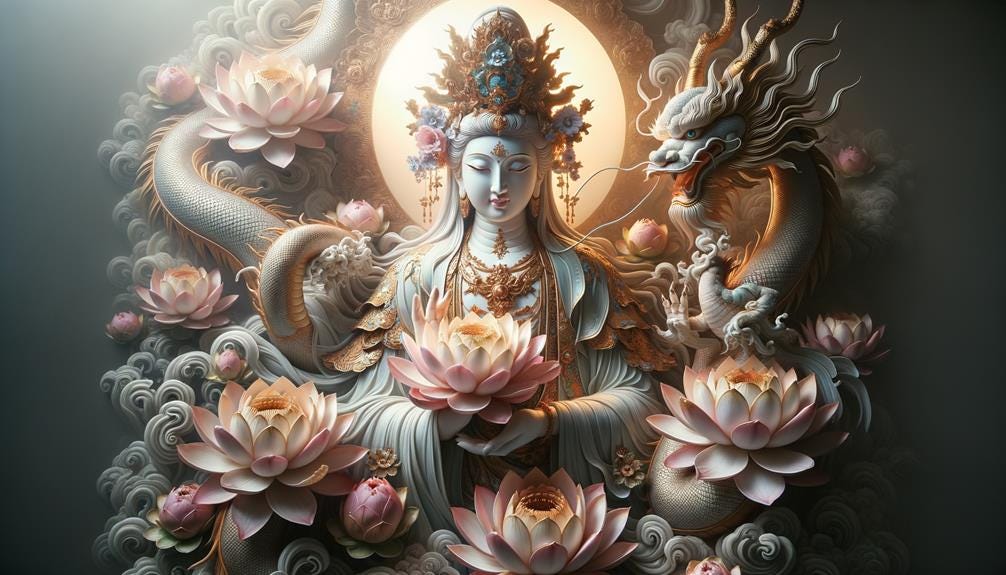
The inner Bodhisattva
If we listen to the wise part of ourselves, and respond with compassion to our own pain, we can hand the reins to our inner Bodhisattva, the higher consciousness that acts in service of truth and love. The inner Bodhisattva does not “have all the answers,” in fact may not have any answers.
But it is able to be in the openness of not-knowing and, most importantly, is willing to bear the painful experiences of ourselves and others.
The inner Bodhisattva does not overanalyze things or try to make a perfect world. It asks questions, discovers what ingredients are available, and makes the best meal it can.
The defining commitments of the inner Bodhisattva are to be: 1) guided by Vow and 2) willing to review and atone for past actions that contradicted their Vow.
That’s all. It is actually quite simple.
I’ll get into the fruit of this path below, but first …..
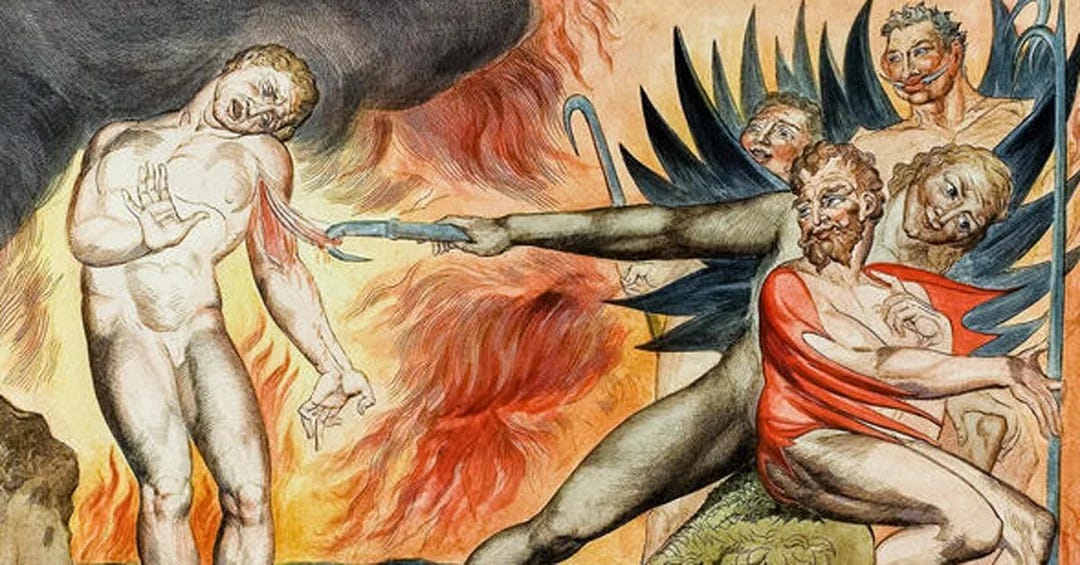
Worry, anxiety, shame, guilt and remorse
OK, what if we don’t give the reins to our inner Bodhisattva? What then?
If we don’t honor the wisdom of our inner Bodhisattva, we know it. We feel it.
Our hearts, seat of deep emotional intelligence, literally feel the loneliness of isolation and the heaviness of subtle armoring. Our nervous systems feel the self-centeredness of our relating.
Our deep mammalian drive for connection feels blocked and thwarted.
And when we feel these things and don’t address them, it leads to the next waves of internal discord: worry, anxiety, shame, guilt and remorse.
You could say JOPPS mind turns on itself.
Guilt and shame are among the most challenging, even intolerable, things to feel in the body. Unless we address them in some way, we have the tendency to double-down on our judgment and opinions in the hopes that our righteousness (which feels great!) will distract us.
Or we revert to anger (which also feels great) in an attempt to blow out the tension.
It may work, for a moment. But eventually it fades and the truth re-surfaces.
Dealing with guilt and shame are challenging, which I don’t mean to minimize. My wife Aria, a Somatic Movement teacher, has educated me on how long periods of sitting meditation can be not only difficult but counter-productive for those carrying a lot of shame. As the Dalai Llama famously reported when he started teaching in the West, he was shocked and saddened by the degree of shame and self-hatred he found in all his Western students. As a Zen teacher used to long hours and days of sitting, I have had to adjust my expectations for some of my students.
Guilt and shame are pervasive forces in our culture. They are among the main themes of James Joyce’s Ulysses, one of the ur-texts for the post-modern Western soul. Both the main protagonists, Stephen Daedalus and Leopold Bloom, are carrying remorse and guilt for leaving their spiritual traditions (Catholicism and Judaism, respectively) and for their relational failings (Stephen towards his mother and Bloom towards his wife Molly).
Joyce, through the voice of Stephen, resurrects the Middle English phrase “agenbite of inwit” to describe the feeling. The traditional translation is “remorse of conscience” derived from the literal phrasing “the again-biting of inner wit”. Which in turn reminds me of a yoga teacher’s description of worry as “an ingrown self‑conflicting process of life which is endless.”
This is the JOPPS mind turning on itself.
Virtue, happiness, wisdom… in that order
If you are still with me, and have understood the two paths available, I’m hoping you are curious about the path of the inner Bodhisattva.
The Buddha actually outlined some key steps. These passages from the Sāmaññaphala and Bhayabherava Sutras are representative.
“Those with unpurified livelihood experience fear and dread because of the defects in their livelihood…. When we have noble ethics, we experience a blameless happiness inside.”
I chose this passage because it explicitly speaks of “right livelihood,” one of my main interests.
Buddha says an ethical foundation for livelihood (and all of life) leads naturally to a “blameless happiness.” Our deeper consciousness knows our commitment to deeper values beyond our own self-interest, beyond the ground truths of JOPPS mind.
It also knows the depth of our commitment; we cannot fool our inner Bodhisattva.
Knowing these things produces a “blameless happiness.” As I understand this, “blameless” does not mean that we have not made mistakes or are never at fault. Indeed, the inner Bodhisattva regularly reviews where we may have been at fault.
No, “blameless” here means the happiness that is free of the paralyzing attacks of JOPPS mind.
Next, fortified with this “blameless happiness,” we become easily satisfied with the simple things in life: food, shelter, friendship. This further quiets our natural craving and agitation. Covetousness, ill will, sloth, fatigue, remorse and doubt … these start to fade away. They have no fuel or place to land.
Finally, we arrive at a deeper wisdom: we become familiar with our true spiritual identity — indeed, we birth it — and truly embrace our path.
One of the false beliefs of our modern trance is that the ethical life is harder and more challenging, less personally rewarding (i.e. “self-denying”), than a more “practical” “worldly,” less “altruistic” life. (I’m putting all those in quotes because they are all multivalent and often weaponized.)
This belief is absolute hogwash.
The ethical life is both simpler and more joyous than a life not grounded in vows. It allows us to live from the heights of a broad vision and welcomes embodiment of all the sensations (pleasurable and painful) that this human incarnation offers.
Mind you, when I speak of the ethical life, I am not saying everyone should take Buddhist vows. Just that you should make your vows conscious.
In my work, I’ve established a framework for discerning and articulating your personal vows that honors your own inheritances and karma, that invites your joys and interests, and that recognizes the complex modern interplay between your realms of Self, Others, and Work (Being, Relating and Doing).
I feel and know from experience that living by Vow is simpler and more joyful than the alternative, the self-conflicting, inner-biting agony of JOPPS mind.
If you would like to discuss working with me one-one or joining the Noble Path Group, please reach out for a chat.
Image Credits: Mythology Vault, William Blake (used for OUR MORAL COMPASS: Understanding Guilt, Remorse, & Atonement, podcast by This Jungian Life.)